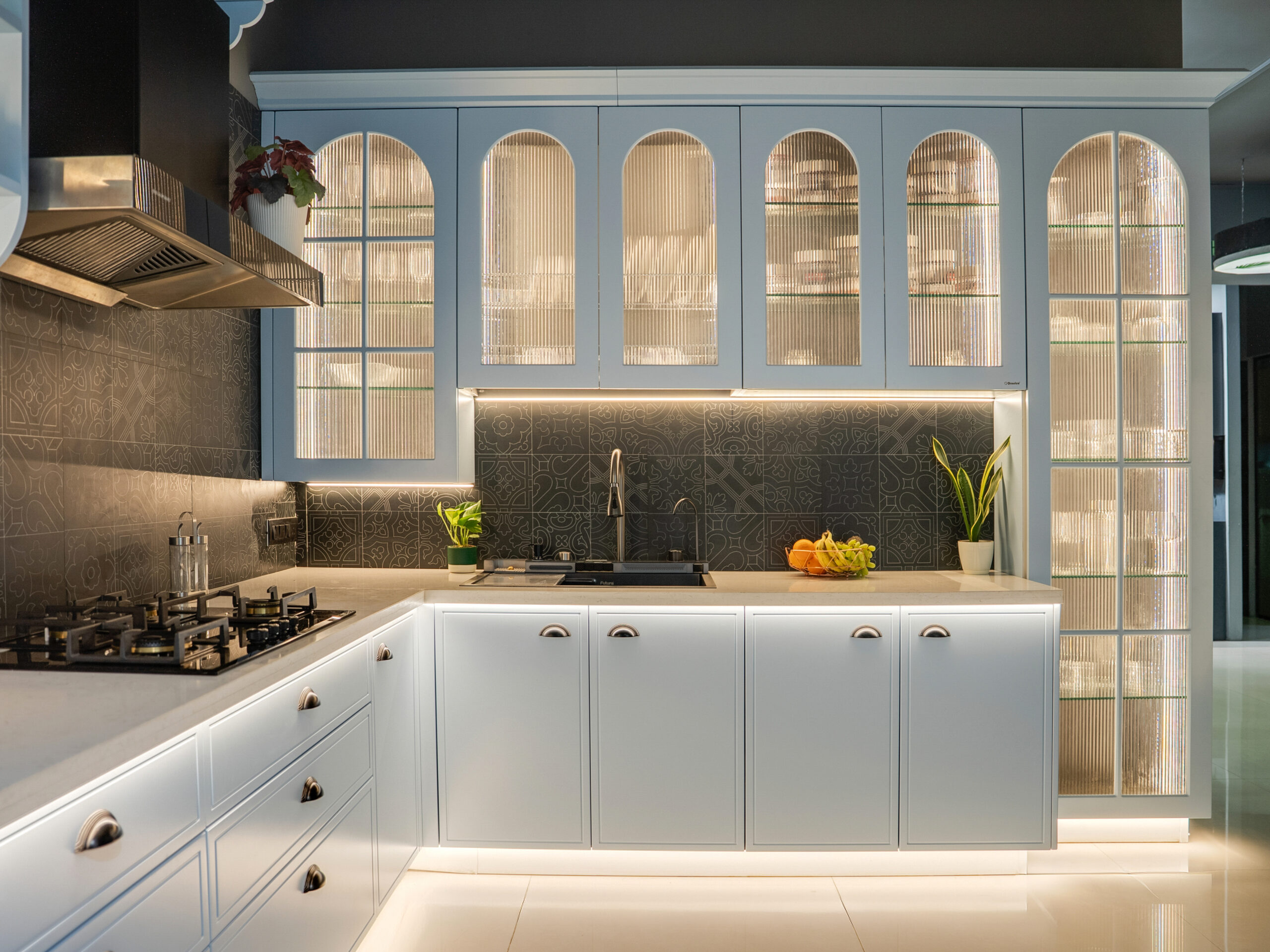
In 2026, creating a contemporary modular kitchen involves blending intelligent automation, premium moisture-resistant materials, and ergonomic configurations.
Homeowners should look for boiling-water-resistant (BWR) carcass materials, layered profile task lighting, and handleless push-to-open hardware.
Instead of generic carpenters, opt for custom manufacturers who focus on those items to prevent cabinet swelling and misaligned hardware in the first three years.
Let’s be completely honest.
Building a kitchen from scratch is easily the most stressful part of home renovation.
Get it right, and your home feels like a luxury retreat. Get it wrong, and you’re stuck with jamming drawers, peeling laminates, and a layout that turns daily cooking into an exhausting chore.
If you’re starting to plan a new kitchen, you don’t just need pretty design pictures.
You need a practical, real-world roadmap that keeps your budget safe and ensures your cabinets last a lifetime.
This is that roadmap.
What a Premium Modular Kitchen Looks Like in 2026
The definition of a luxury kitchen has completely changed.
It is no longer just a place to cook meals. It has integrated seamlessly into the living architecture of your home.
Here’s what separates a premium 2026 kitchen from everything built before it.
1. Sensorial Matte Finishes Over High-Gloss
High-gloss acrylics are stepping back.
Ultra-matte, velvet-touch surfaces are the new standard. These modern laminates look incredibly rich and come with anti-fingerprint and scratch-resistant coatings built into the surface layer.
No more wiping down greasy smudge marks every time someone touches a cabinet door.
The finish does the work for you.
2. Invisible Hardware and Seamless Automation
The Hidden Traps: Why Cheap Kitchens Fail Within 3 Years
1. Swelling Boards Due to Wrong Material Selection
The structural box behind your shutter is called the carcass. If a vendor uses cheap particle board or standard MDF near
your sink or dishwasher area, the daily steam and water splashes will destroy
it quietly. Within two monsoons, the wood absorbs moisture, swells up
from the inside, and completely breaks the hinge alignments. The doors start sagging. The drawers stop closing. The
cabinet becomes unusable. And it all starts with a material decision made on day one.
2. Peeling Edges from Cheap Factory Work
- Stove
- Sink
- Fridge
Fuck with this triangle and your kitchen will suck you dry every day.
| Layout Type | Best Suited For | Main Utility Benefit |
|---|---|---|
| G-Shape Layout | Medium to large open homes | Extended wrap-around counter that doubles as a breakfast or dining nook |
| L-Shape Layout | Compact apartment spaces | Most versatile setup that leaves maximum open floor space for movement |
| Parallel Layout | Narrow, long kitchen galleys | Highly efficient split workflow that divides wet prep entirely from the hot cooking zone |
Not sure which one fits your home? That’s exactly the kind of decision we map out at your first Quodex consultation — before a single panel is ordered.
The Nightmare Triad: Galat Material, Design aur Company Chunne Ka Asar
1. Wrong Material: Your Kitchen Starts Rotting From the Inside
Hinges Pulling Out: When the inside board is hollow and weak, the weight of heavy dishes and everyday use is beginning to yank the hinge screws right out of the wood. The take away? In a few months your kitchen doors are hanging askew – and no amount of tightening helps because the board itself has given up.
Fungus and Foul Smell: Even a small water droplet under the sink will rot a cheap board from the inside. And when that rot sets in, a weird, lingering smell begins to waft through the kitchen — and before you know it, the entire house.
2. Wrong Design: Daily Cooking Becomes a Punishment
A kitchen can look stunning in photos. But if the layout and engineering are wrong, working in it every single day becomes genuinely exhausting.
The Dead Corner Trap: Inexperienced designers don’t properly plan the corners in L-shape or U-shape kitchens. That space turns into a “Dead Zone” — a dark, unreachable corner where vessels get lost, and retrieving anything means bending halfway inside the cabinet.
Wrong Counter Height: If the counter height isn’t matched to the person doing most of the cooking in your home — too high or too low — the back pain starts within weeks. Not months. Weeks.
The Smoke and Heat Trap: If the distance and alignment between your stove and chimney are off, the smoke and grease from your daily cooking doesn’t exit the kitchen. It drifts straight into your living room and settles onto your premium sofa and curtains.
3. Inexperienced Company: Hidden Costs and Half-Finished Work
The biggest issue with hiring a new or inexpensive local agency is not just the quality of their work.
It’s that they lack professionalism, and you end up paying for that in ways you never anticipated.
Budget Doubling: They start with an appealing low quote to win the job. But as soon as the work begins, it becomes clear “Sir, the profile lighting is extra, the transport is separate, the handles aren’t included” and before you realize it, your budget has quietly increased by 40%.
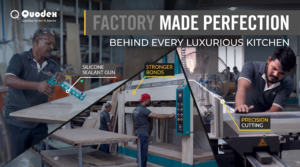
Finishing Failures: They don’t have modern factory machinery. Edge banding gets applied by hand, which starts peeling within a year. The gaps between shutters are uneven and visible, and that messy finish undermines the overall look of your entire home.
Frequently Asked Questions
Q: What is the most important material decision in a modular kitchen?
The carcass (inner box) material is the most critical choice. Always choose BWR-grade (Boiling Water Resistant) plywood or marine-grade MDF for areas near the sink, dishwasher, and hob. Cheap particle board in these zones fails within 2 to 3 monsoon seasons in Mumbai.
Q: How do I know if my kitchen layout is efficient?
Use the Kitchen Work Triangle rule. The combined distance between your stove, sink, and refrigerator should ideally be between 13 and 26 feet. Anything longer creates unnecessary movement. A skilled kitchen designer will map this out before ordering any cabinets.
Q: What’s the difference between acrylic and matte laminate finishes?
Acrylic gives a high-gloss, reflective look but shows fingerprints easily and can yellow when exposed to direct sunlight over time. Matte laminates with anti-fingerprint coating are more practical for Indian kitchens; they are easier to maintain and age better.
Q: Why do modular kitchen hinges start failing within a year?
This is almost always due to two main issues: cheap carcass board that cannot hold the screw torque after repeated use and low-quality hinges that aren’t rated for the weight of the shutters. Premium kitchens use Hettich or Häfele soft-close hinges rated for over 100,000 open-close cycles.
Q: How long should a well-built modular kitchen last?
A kitchen built with the right materials, factory-finished panels, and German hardware should comfortably last 15 to 20 years without any structural issues. Anything falling apart before 5 years indicates a failure in materials and workmanship and is not a normal wear issue.
Your Next Steps
Planning your kitchen layout is just one piece of the puzzle.
To ensure your entire home has the same premium design and functionality, budget wisely from the start.
Check out our realistic breakdown on [Mumbai Modular Kitchen Cost Guide 2026] to make sure your dream layout matches your renovation estimates.
Want a kitchen designed for life? Don’t risk your home interior with generic quotes and unverified materials.
Connect with the premium design desk at Quodex today. Set up a personalized consultation, and let’s create a functional, high-quality culinary space that suits your daily routines down to the last millimetre.